
How Phoenix Heat Affects Your Garage Door and What to Do About It
Phoenix summers push temperatures above 110°F for weeks at a time, and late August sits right in the middle of that stretch. That sustained heat does more than make your driveway uncomfortable to walk across. It puts real mechanical stress on every component of your garage door system, from the springs and cables to the weather seals and opener motor. Understanding how heat affects these parts helps you catch problems early and avoid a breakdown at the worst possible moment.
What High Temperatures Actually Do to Garage Door Components
Metal expands when it heats up. In a Phoenix garage, steel springs, cables, and tracks cycle through significant temperature swings between the cool of the morning and the peak heat of the afternoon. Over time, that repeated expansion and contraction causes metal fatigue, which shortens the lifespan of springs and cables.
Torsion springs typically carry a cycle rating between 10,000 and 30,000 open-and-close cycles. Heat accelerates wear and reduces the number of usable cycles before a spring breaks. A spring that might last eight years in a cooler climate may fail sooner here in the Valley.
Lubrication also breaks down faster in extreme heat. Standard lubricants thin out and drip off the moving parts that need protection most: the rollers, hinges, and cable drums. Once lubrication fails, metal-on-metal friction increases, and components wear at a faster rate.
Warning Signs to Watch for Before Labor Day
Late August is a practical time to inspect your garage door, because the hottest weeks of the year have already put the system through its heaviest stress. Look and listen for these signs that something needs attention:
- Slow or uneven movement: The door hesitates, jerks, or moves more slowly on one side than the other.
- Grinding or squeaking sounds: Dry rollers or worn hinges produce noise during operation.
- The door reverses before closing: The opener senses resistance it should not encounter and stops the door mid-cycle.
- Visible gaps in the weather seal: Heat warps and cracks rubber seals along the bottom and sides of the door, letting hot air and dust into your garage.
- The opener motor runs but the door does not move: A broken spring places the full weight of the door on the opener, which the motor cannot handle alone.
- Sagging or bowing panels: Extended UV exposure causes some panel materials to warp or fade, which affects both appearance and alignment.
Maintenance Steps That Extend the Life of Your System
Several maintenance tasks take under an hour and reduce the likelihood of a mid-season failure.
Lubricate Moving Metal Parts
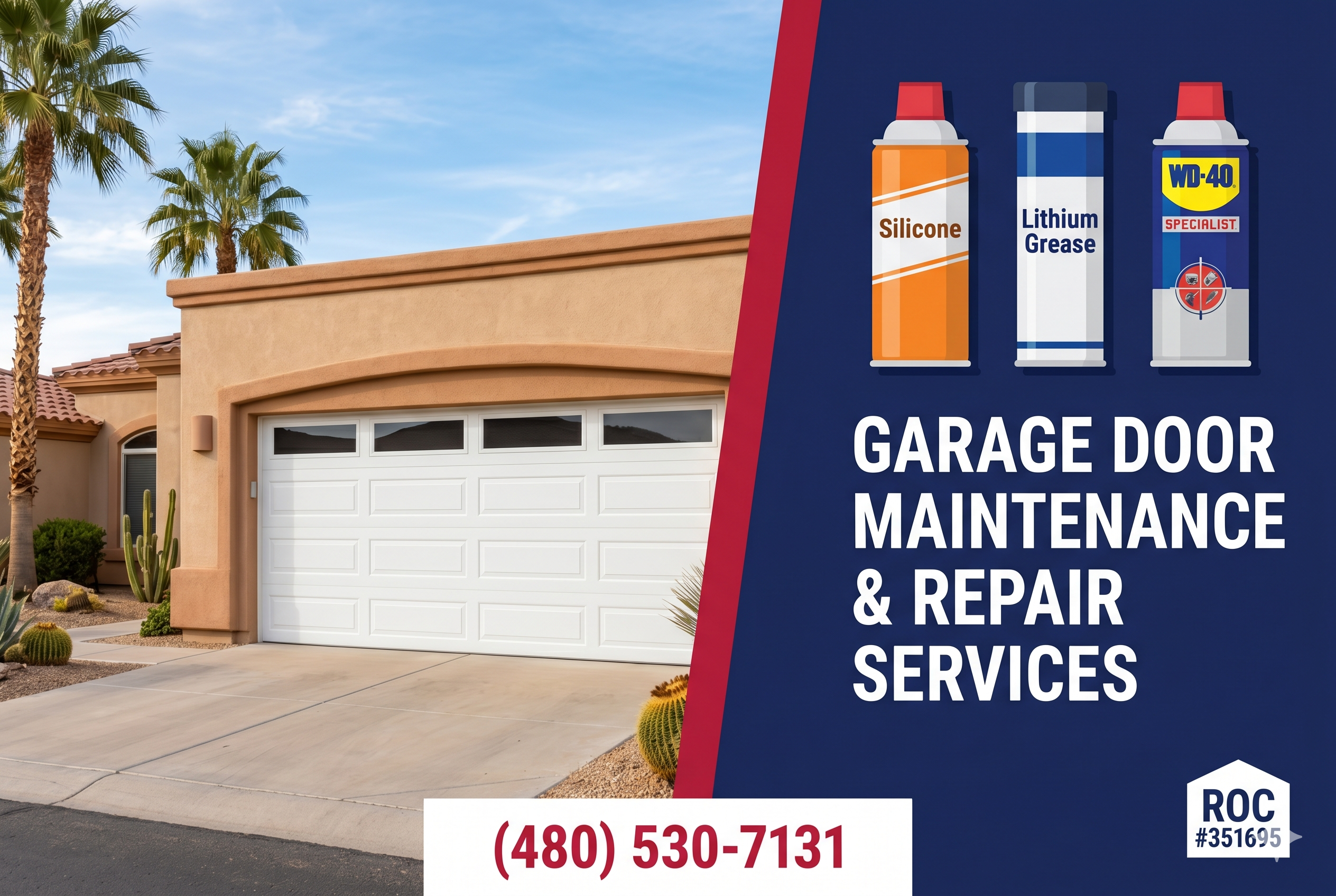
Apply a silicone-based or lithium-based lubricant to the rollers, hinges, springs, and cable drums. Avoid WD-40 on garage door components. It displaces moisture but does not provide lasting lubrication, and it attracts dust. Re-lubricate every three to six months in Phoenix’s climate.
Test the Manual Release and Balance
Pull the red emergency release cord to disconnect the opener, then lift the door by hand to about waist height and let go. A properly balanced door stays in place. A door that drops or rises on its own has a spring tension problem that a technician should evaluate.
Inspect and Replace Weather Seals
Check the rubber seal along the bottom of the door for cracks, splits, or sections that no longer contact the ground evenly. A functional bottom seal keeps cooled garage air inside and blocks desert dust from entering. Replacement seals are available by the foot and attach without specialized tools in most cases.
Clear the Tracks
To avoid costly track repair, wipe the inside of the vertical and horizontal tracks with a damp cloth to remove dirt and debris. Do not lubricate the tracks themselves. Clean, debris-free tracks allow the rollers to move smoothly without extra resistance.
When to Call a Professional
Some repairs fall outside the range of safe DIY work. Torsion spring replacement involves cables and components under high tension. Adjusting spring tension incorrectly can cause serious injury. If you observe a broken spring, a cable that has slipped off its drum, or a track that has bent out of alignment, contact a garage door technician before attempting any adjustments yourself.
Garage Door AZ LLC serves homeowners across Phoenix and the surrounding Valley. Our team inspects, repairs, and replaces garage door components on all major brands and door styles. We carry parts in stock for most common repairs, which means fewer return visits and faster turnaround.
Get Your Garage Door Ready for the Rest of Summer
Phoenix still has several weeks of intense heat ahead before temperatures drop into the 90s in October. A quick inspection now can prevent a breakdown during that window. If your garage door is showing any of the warning signs listed above, or if it simply has not been serviced in the past year, schedule a check before the problem grows.
Frequently Asked Questions
How often should I schedule professional garage door maintenance in Phoenix?
Most technicians recommend a full professional inspection once a year in moderate climates, but Phoenix’s extreme heat justifies scheduling one every six months. The combination of UV exposure, high temperatures, and dust accelerates wear on springs, cables, and seals faster than in cooler regions, so more frequent check-ups catch problems before they become costly repairs.
Can I replace garage door weather seals myself, or do I need a professional?
Bottom door seals are generally a straightforward DIY replacement. You slide or nail the new seal into the retainer channel along the bottom of the door, and most hardware stores sell the material by the foot. Side and top seals can be trickier to align properly, so if gaps persist after replacing the bottom seal, a technician can assess whether the door frame or the seal itself needs adjustment.
What type of lubricant works best for garage doors in high-heat climates like Phoenix?
Silicone-based and white lithium-based lubricants hold up better in extreme heat than general-purpose sprays because they maintain their viscosity instead of thinning and dripping off moving parts. Apply the lubricant directly to rollers, hinges, springs, and cable drums, then wipe away any excess to prevent dust buildup. In Phoenix’s climate, plan to reapply every three months rather than the standard six-month interval recommended for cooler areas.
Is it safe to keep using my garage door if a spring looks worn but has not broken yet?
Continuing to operate a door with a visibly worn spring carries real risk. Springs store significant tension, and a spring that snaps unexpectedly can cause injury or damage the door panels, cables, and opener. Scheduling a replacement before the spring fails completely is safer and typically less expensive than repairing secondary damage caused by a sudden break.
Does Phoenix heat affect the garage door opener itself, not just the mechanical parts?
Yes, opener motors generate heat during operation, and running in an already hot garage can cause the motor to overheat and trigger a thermal cutout, which temporarily shuts the unit down. Circuit boards and drive belts inside the opener also degrade faster under sustained high temperatures. Keeping the garage slightly ventilated and avoiding excessive door cycles during peak afternoon heat can help the opener last longer between service calls.
Call Garage Door AZ LLC at (480) 530-7131 or visit garage-door-arizona.com to request service. Our customers have given us a 5-star rating across 21 reviews, and we work to earn that with every job we take on in the Phoenix area.