
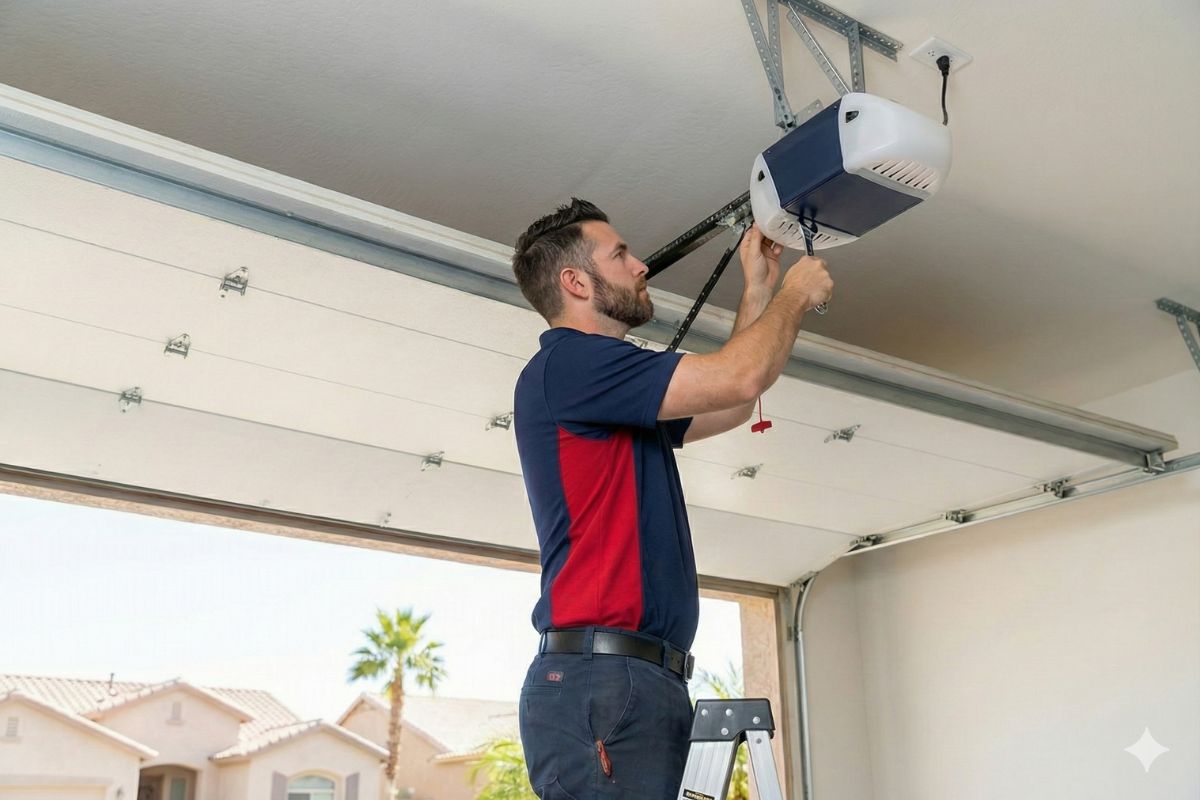
Is your garage door motor humming but failing to lift the door? Or perhaps it has stopped responding to your remote altogether? Garage door opener repair Phoenix is a critical service for homeowners who rely on their garages as the primary entrance to their homes. In the intense heat of Arizona, mechanical and electrical components face unique stress factors that lead to premature wear and tear. At Garage Door AZ, we specialize in diagnosing these complex issues. With years of hands-on work throughout Arizona, our team understands the most common garage door issues and knows how to restore function effectively and correctly on the initial visit.
Understanding the Need for Expert Garage Door Opener Repair in Phoenix
The garage door opener is the “brain” of your entire system. When it fails, it’s rarely just a single button at fault; it’s often a symptom of underlying issues like improper garage door balancing or worn-out torsion springs. In Phoenix, the expansion and contraction of metal components due to temperature swings can cause the tracks / rails to misalign, putting immense strain on the opener’s drive belt or chain drive.
Every repair is handled by a licensed and insured technician who takes the time to inspect your door thoroughly and explain the issue in clear, direct terms before starting any work. We don’t just fix the symptom; we ensure the entire residential garage door service ecosystem is functioning perfectly to prevent future breakdowns.
Anatomy of a Garage Door Opener System
To understand why your system failed, it is helpful to know the components we inspect during a standard garage door opener repair in Phoenix call.
1. The Motor Unit and Circuit Board
The heart of the opener. In Phoenix, dust and heat can cause the circuit board to short or the capacitor to fail. We test the amperage draw to ensure the motor isn’t working too hard.
2. Drive Systems: Chain, Belt, and Screw
-
Chain Drive: Reliable but noisy. Common in older Phoenix homes.
-
Belt Drive: Quiet and durable, using a steel-reinforced rubber belt.
-
Screw Drive: Requires specific silicone-based lubricant to handle the Arizona dust.
3. Safety Sensors (Photo-Eyes)
If your door starts to close and then reverses, the safety sensors are likely the culprit. These infrared eyes must be perfectly aligned. If they are caked in desert dust, the connection breaks, and the door won’t close.
Common Failure Points in Phoenix Garages
Arizona’s environment is harsh. Here is how we address the most frequent issues:
- Broken Drive Gears: Often found in LiftMaster or Chamberlain models where the plastic gears strip over time.
- Worn Rollers and Pulleys: If the door doesn’t slide smoothly, the opener motor will eventually burn out.
- Limit Switch Settings: Heat can cause the housing to shift, requiring a recalibration of where the door stops.
The Link Between Opener Failure and Hardware Issues
Often, when a customer calls for garage door services, they believe the motor is dead. However, our about us philosophy is based on thoroughness. We often find that the garage door opener is fine, but the torsion springs have snapped.
Torsion Springs vs. Extension Springs
Springs do the heavy lifting, not the motor. If you have a broken spring replacement need, the opener will struggle to lift the weight, eventually leading to a costly motor failure. We use professional winding bars to set the correct tension, ensuring your opener lives its full 15-year lifespan.
Cables, Hinges, and Brackets
We inspect the garage door cables for fraying. In the dry Arizona air, metal-on-metal contact can cause hinges and brackets to crack. A quick application of a high-quality lubricant during a tune-up / preventive maintenance session can prevent a total system collapse.
Step-by-Step Diagnostic Process for Phoenix Homeowners
When we arrive at your property in any of our service areas, we follow a strict protocol:
-
Visual Inspection: We look for sagging garage door sections or bent tracks / rails.
-
Balance Test: We disconnect the opener and lift the door manually. If it doesn’t stay halfway open, the springs need adjustment.
-
Force Adjustment Testing: We ensure the limit switch settings are safe, preventing the door from crushing objects.
-
Remote and Keypad Sync: We verify the remote control and keypad frequencies are clear of local interference.
| Component | Common Symptom | Service Needed |
|---|---|---|
| Circuit Board | Unresponsive to all signals | Replacement / Wiring Check |
| Drive Gear | Grinding noise, no movement | Gear & Sprocket Kit |
| Photo-Eyes | Door reverses at the bottom | Realignment / Cleaning |
| Bottom Seal | Light/Dust under the door | Weatherstripping Replacement |
Commercial vs. Residential Garage Door Opener Repair
While many homeowners know us for our home services, we also provide robust commercial garage door service. Commercial openers often use jackshaft or heavy-duty trolley systems. These require specialized knowledge of high-voltage 3-phase power systems. Whether you have a small shop or a large warehouse in Phoenix, our team is equipped to handle the scale.
Why Maintenance Prevents Emergency Repairs
The best way to avoid an off-track door or a stuck garage door in the middle of a Phoenix summer is regular maintenance. We recommend a “Tune-Up” every 12 months. This includes:
-
Tightening all hinges and brackets.
-
Lubricating rollers and pulleys.
-
Checking the bottom seal / weatherstripping for cracks.
-
Testing the emergency release cord.
If you’re interested in joining our expert team of technicians, check out our careers page to see how we maintain the highest standards in Arizona.
FAQ: Garage Door Opener Repair in Phoenix
1. Why is my garage door opener making a grinding noise?
This is usually caused by a stripped drive gear inside the motor unit. In Phoenix, the heat can make plastic gears brittle over time. We can replace the gear and sprocket kit to restore quiet operation.
2. Does the Phoenix heat affect my garage door sensors?
Yes. Direct sunlight can “blind” the infrared safety sensors (photo-eyes), and extreme heat can cause the mounting brackets to warp, leading to misalignment. Keeping them clean and shaded helps.
3. How long do garage door openers typically last in Arizona?
Most high-quality openers last 10-15 years. However, without regular lubrication of the rollers and pulleys, the motor may burn out closer to the 8-year mark due to the dry environment.
4. Can I replace the garage door opener circuit board myself?
While possible, it is risky. Modern boards require specific programming and must be shielded from static electricity. Our licensed technicians ensure the board is compatible with your specific motor and remote frequency.
5. What should I do if my garage door is off-track?
Stop using the opener immediately! Operating an off-track door can burn out the motor and cause the door to fall. Contact us for professional realignment of the tracks and rails.
6. Why does my remote only work when I’m right in front of the garage?
This is often due to signal interference or a weak battery. In some cases, the antenna on the motor unit may be damaged or the circuit board may be starting to fail.
7. Is a belt drive better than a chain drive for Phoenix homes?
Belt drives are much quieter and generally last longer in our climate because they don’t require as much grease, which can attract desert dust and grime.
8. Do you provide emergency garage door opener repair in Phoenix?
Yes, we offer 24/7 emergency services for both residential and commercial clients across Arizona to ensure your property remains secure.
Conclusion: Trusted Garage Door Opener Repair in Phoenix
In conclusion, maintaining your home’s accessibility requires professional attention to detail. Garage door opener repair in Phoenix is not just about changing a battery; it’s about ensuring the mechanical harmony of the torsion springs, cables, and the motor itself. At Garage Door AZ, we are committed to providing Arizona residents with the most transparent and effective repairs in the valley. With years of hands-on work throughout Arizona, our team understands the most common garage door issues and knows how to restore function effectively and correctly on the initial visit.
Don’t wait until your car is trapped inside your garage. Contact us today for a full inspection and repair. If you want to learn more about garage door safety, visit our blog.