
A storm knocks out the power, the opener goes dead, and your car sits trapped behind a door that refuses to move. This is one of the situations homeowners across Phoenix and the East Valley call us about most. The solution is already installed above your head. Every modern overhead door includes a manual override, and learning to operate the garage door emergency release cord correctly puts you back in control without risking injury or damage. Read on to understand what the cord does, how to pull it the right way, and how to protect your home once the opener is disconnected — a core piece of everyday home safety.
What the Garage Door Emergency Release Cord Does
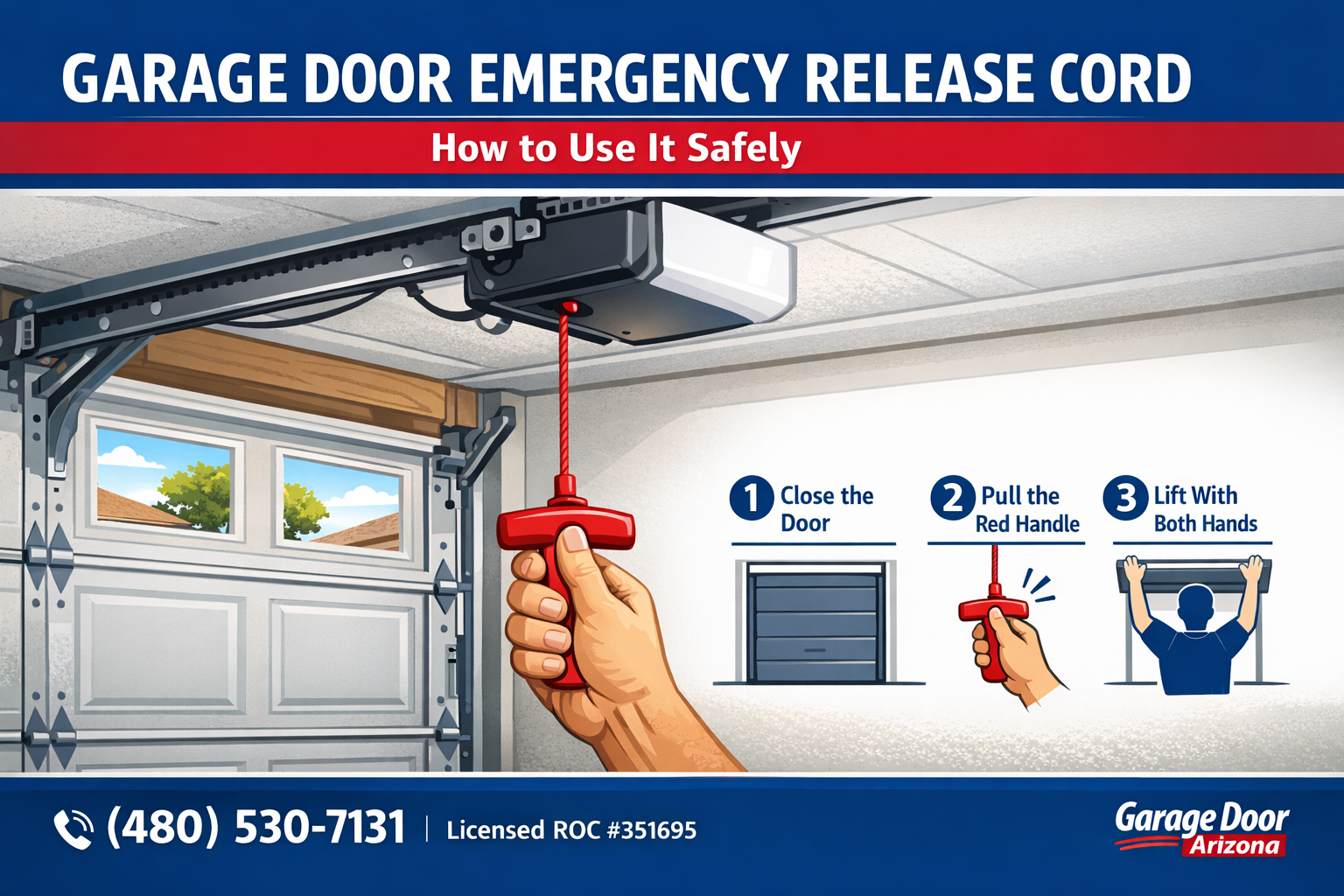
The release cord is the red handle that hangs from the opener rail near the center of your garage. It attaches to the trolley — the moving carriage that pushes your door open and closed along the track. Pulling the handle separates the trolley from the powered carriage and shifts the door into manual mode, so it glides on its own springs and rollers without motor assistance.
Manufacturers build this feature into residential units as a safety requirement, a standard documented by the Door & Access Systems Manufacturers Association. At Garage Door Arizona, our licensed technicians point it out during every maintenance and tune-up visit so families know exactly where it is and how it works before they ever need it. In our desert climate, where heat hardens lubricants and stresses components, that familiarity matters more than most homeowners expect.
When to Pull Your Garage Door Emergency Release Cord
Reach for the manual release when the door is fully closed and resting on the floor. A closed door carries no stored energy, so disconnecting it is controlled and predictable. Pulling the cord while the door is raised is risky: if a spring has snapped or a cable has failed, the panel can drop under its own weight once the opener no longer holds it.
These are the situations that call for the release:
- A power outage leaves the opener with no electricity.
- The motor or circuit board fails and the door ignores the remote.
- The door jams partway and needs to be guided back onto its track.
If the door is stuck open and you suspect a broken spring, keep everyone clear and arrange emergency garage door repair instead of yanking the handle. High-tension springs hold enough force to cause serious harm, which is why we treat them as a technician-only job.
How to Use the Release Cord Safely, Step by Step
Close the Door First
Lower the door before you disengage anything. With the panel on the ground, there is no tension waiting to pull it down once the trolley is free, and your hands stay out of harm’s way.
Pull the Red Handle Down and Back
Grip the handle and pull it straight down, then back toward the motor unit. You will feel and hear the trolley click loose from the carriage. The door is now in manual mode and will move by hand.
Lift With Both Hands
Raise the door using the lifting handles or the bottom panel, keeping your fingers away from the section joints. A balanced door rises smoothly and stays put. If it feels heavy or slides back down, the springs are out of balance — stop and contact our spring repair team rather than forcing it.
Re-engage After Power Returns
Pull the handle toward the door to reset the trolley, then run the opener through a single cycle. The carriage locks back onto the trolley on its own.
Pro Tip From Our Arizona Technicians
In our 10-plus years servicing doors across Mesa and the surrounding metro, we see one mistake repeat itself: homeowners reconnect the trolley by hand and assume the job is finished. It is not. Always run the opener through a full open-and-close cycle and watch the trolley snap into place. We also recommend testing the safety sensors afterward, since a bumped photo-eye is a frequent reason a door reverses or will not close following a manual reset.
Comparing Your Security Options After Manual Release
A door left in manual mode can be lifted from outside by someone who fishes the release cord with a wire. The table below compares the layers we recommend to keep your entry protected and your household secure.
| Security Measure | What It Protects | Security Level | Recommended For |
|---|---|---|---|
| Opener disconnected, cord exposed | Garage entry | Low | Manual operation as a stopgap |
| Shortened or zip-tied release cord | Blocks cord “fishing” from outside | Medium | Garages with windows or side gaps |
| Interior deadbolt (garage-to-house door) | The living space | High | Every attached garage |
| Thumbturn lock on the interior door | Keyless exit for your family | High | Households with children |
| Manual slide lock on the door track | The full garage door | High | When the home will be empty |
| Aligned safety sensors | Auto-reverse if something is underneath | Essential | Homes with kids or pets |
Securing the Garage After You Disconnect the Opener
Strengthening the entry is a smart layer of home safety once you understand how exposed a manual door can be. Add a deadbolt to the interior door between the garage and the house — strong deadbolt security keeps your living space protected even if the garage itself is breached. A thumbturn lock on that same door lets your family step out without hunting for a key in an emergency while still locking out intruders. For high-grade hardware or rekeying to match your existing keys, a professional locksmith can coordinate the deadbolt and thumbturn lock setup with the rest of your home.
You can also shorten the release cord so it cannot be reached from outside and engage the manual track lock before you travel. Federal consumer product safety guidance echoes these habits for any home with an automatic opener.
Keep Your Door Operating Safely With a Professional Inspection
Knowing how to work your garage door emergency release cord is the first half of the equation; making sure the springs, cables, and sensors behind it are sound is the other. Our background-checked, licensed team (ROC #351695) handles high-tension spring work and full safety audits so your manual override performs the way it should when you depend on it. Book an installation or a security inspection by calling (480) 530-7131, reach out through our contact page, or find us on Google Maps. You can also explore our complete range of residential garage door services to keep every part of your system working as one.