
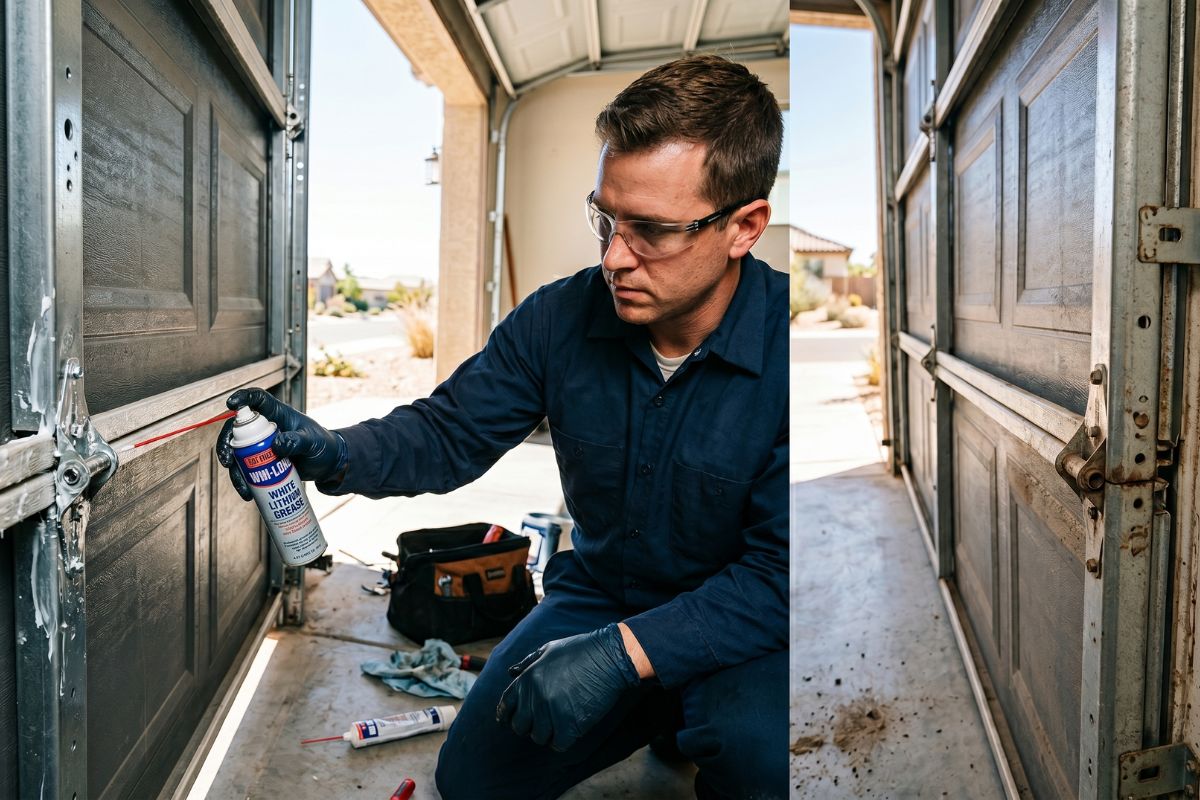
That high-pitched squeal every time your garage door opens isn’t just annoying — it’s your door telling you something is wrong. Metal grinding against metal, dry rollers struggling to glide, springs working harder than they should: these are the warning signs of a poorly lubricated system that’s headed for an expensive breakdown. The solution is simpler than most homeowners realize. Picking the best garage door lubricant and applying it correctly can extend the life of your door by years and eliminate those grating noises overnight. Keep reading to learn exactly which products work, which ones to avoid, and how a properly lubricated door connects to your overall home safety strategy.
Why Garage Door Lubrication Matters More in Arizona
We’ve serviced thousands of homes across Mesa, Phoenix, Chandler, and Scottsdale over the past decade, and one pattern is clear: Arizona’s extreme heat punishes garage door components harder than almost any other climate in the country. Temperatures inside an attached garage can climb well above 130°F in summer, evaporating standard lubricants and leaving metal parts dry and exposed.
When components run dry, friction multiplies. Rollers wear down, hinges seize, and torsion springs — the most dangerous part of any garage door system — take on stress they were never engineered to handle. A door that should last 15 to 20 years can fail in half that time when residential garage door service and lubrication are neglected.
Proper lubrication isn’t just about silence. It’s about preserving the structural integrity of the heaviest moving object in your home, which on average weighs between 150 and 400 pounds.
The Best Garage Door Lubricant: What Actually Works
Not every lubricant on the hardware store shelf belongs on your garage door. Choosing the wrong one is worse than using nothing at all — some products attract dust, gum up rollers, and accelerate the very wear you’re trying to prevent. Our garage door services team has tested every category, and here’s what we recommend after years of hands-on experience:
Silicone-Based Spray Lubricants
Silicone sprays are our go-to recommendation for most residential garage doors. They penetrate small spaces, repel dust, and hold up well in heat. They work especially well on hinges, springs, and bearing plates — components we regularly inspect during a garage door tune-up.
White Lithium Grease
For metal-on-metal contact points like the chain or screw drive of your opener, white lithium grease creates a durable protective layer that withstands high temperatures. It’s thicker than spray lubricants and stays in place longer, which is why our garage door opener technicians prefer it for drive systems.
Garage-Door-Specific Lubricants
Brands like 3-IN-ONE Professional Garage Door Lubricant and Genie Garage Door Lubricant are formulated specifically for these systems. They contain additives that resist heat, dust, and corrosion — exactly what homes across Phoenix and the East Valley need.
What to Avoid
Never use WD-40 as a long-term lubricant. It’s a degreaser and water displacer, not a true lubricant. Spraying it on your door temporarily quiets the noise but strips away existing grease, leaving components more vulnerable than before. Also avoid motor oil, grease made for automotive use, and any petroleum-based product not rated for garage doors.
Lubricant Comparison Table
| Lubricant Type | Best Use Case | Heat Resistance | Dust Resistance | Application Frequency |
|---|---|---|---|---|
| Silicone Spray | Hinges, springs, rollers | Excellent | Excellent | Every 6 months |
| White Lithium Grease | Chain drives, screw drives | Excellent | Good | Every 6 months |
| 3-IN-ONE Garage Door Lube | All metal components | Excellent | Excellent | Every 6 months |
| WD-40 | Not recommended | Poor | Poor | Avoid |
| Motor Oil | Not recommended | Fair | Poor | Avoid |
| Lithium Spray | Bearings, opener rails | Very Good | Very Good | Every 6 months |
How to Lubricate Your Garage Door Step by Step
Before you start, disconnect power to the opener and close the door completely. Safety comes first on any home maintenance task involving high-tension components. If you’re unsure at any point, our garage door repair specialists are available to walk you through it.
Step 1: Clean the Tracks
Wipe down the inside of the vertical and horizontal tracks with a damp cloth. Don’t lubricate the tracks themselves — this is a common mistake. Tracks should stay clean and dry; the rollers do the moving.
Step 2: Lubricate the Rollers
Spray silicone lubricant into the bearings of each roller. If your rollers are nylon with exposed bearings, focus the spray on the metal bearing only. Wipe away excess. Worn or damaged rollers should be replaced as part of a complete hardware overhaul.
Step 3: Treat the Hinges
Apply lubricant to each hinge where the metal pivots. Open and close the door manually a few times to work the product in.
Step 4: Coat the Springs
Lightly mist the torsion spring above the door with silicone spray. Never attempt to adjust, tighten, or remove a spring yourself. Torsion springs hold tremendous stored energy and can cause serious injury or death when handled improperly. For any spring concern, contact our spring replacement and repair team.
Step 5: Address the Opener
For chain-drive openers, apply white lithium grease along the chain. For screw-drive openers, apply it along the screw thread. Belt-drive openers don’t require lubrication on the belt itself.
Pro Tip from Our Lead Technician
After ten years of servicing East Valley homes — including Chandler, Gilbert, Scottsdale, and Tempe — our most consistent finding is this: homeowners who lubricate every six months almost never need emergency spring or roller replacements. Mark your calendar for spring and fall — when Arizona’s temperature shifts dramatically — and stick to it. A ten-minute maintenance routine twice a year saves hundreds in repairs.
We also recommend listening to your door. A well-lubricated door operates with a smooth, low hum. If you hear popping, scraping, or grinding, lubrication alone won’t fix it. That’s the moment to call a professional locksmith or garage door technician for a full inspection. For commercial properties, our commercial garage door service team handles industrial-grade systems with the same attention to detail.
Connecting Garage Door Care to Home Security
Your garage door is the largest entry point in your home, and many homeowners overlook how it ties into broader home safety. A well-maintained door closes fully and seals properly — no gaps for intruders to exploit. Pair that with proper interior door hardware like a deadbolt security lock or a quality thumbturn lock on the door connecting your garage to the house, and you’ve built a layered defense system.
Garage Door Arizona is licensed under ROC #351695, and our team has handled every type of residential and commercial system across Maricopa County. We’ve seen what happens when small issues are ignored — and we’ve helped homeowners across Mesa and beyond prevent it.
Frequently Asked Questions
How often should I lubricate my garage door?
For most Arizona homes, we recommend lubricating your garage door every six months — once in spring and once in fall. The extreme heat in our region breaks down lubricants faster than in cooler climates, so consistency matters.
Is WD-40 a good garage door lubricant?
No. WD-40 is a degreaser and water displacer, not a true lubricant. It strips away existing grease and leaves components dry. Use silicone spray or white lithium grease instead.
Should I lubricate the garage door tracks?
Never. Tracks should be wiped clean and kept dry. Lubricant on tracks attracts dust and debris, causing rollers to skip and bind. Only the rollers, hinges, springs, and opener mechanism need lubrication.
Can I lubricate the garage door springs myself?
You can lightly spray silicone lubricant on the springs from a safe distance, but never touch, adjust, or attempt to repair them. Torsion springs store enormous energy and require certified handling. Call our team at (480) 530-7131 for any spring service.
What’s the best garage door lubricant for hot climates like Phoenix?
Silicone-based sprays and garage-door-specific lubricants like 3-IN-ONE Professional Garage Door Lubricant perform best in Arizona’s heat. They resist evaporation, repel dust, and protect metal components from corrosion.
My garage door still squeaks after lubrication. What’s wrong?
Persistent noise after lubrication usually indicates worn rollers, loose hardware, or spring tension issues. Schedule a professional inspection — our licensed technicians can diagnose the cause and recommend the right repair.
Schedule a Professional Inspection Today
Lubrication is something every homeowner can handle, but a complete safety audit of springs, cables, openers, and security hardware should be performed by a certified technician. If your door is making unusual noises, moving unevenly, or hasn’t been inspected in over a year, don’t wait for a failure. Browse our full range of garage door services to see how we can help.
Call Garage Door Arizona at (480) 530-7131 to schedule a professional inspection or installation. You can also find us on Google Maps to read reviews from your neighbors across Mesa, Phoenix, Chandler, Gilbert, Scottsdale, Tempe, and Guadalupe.